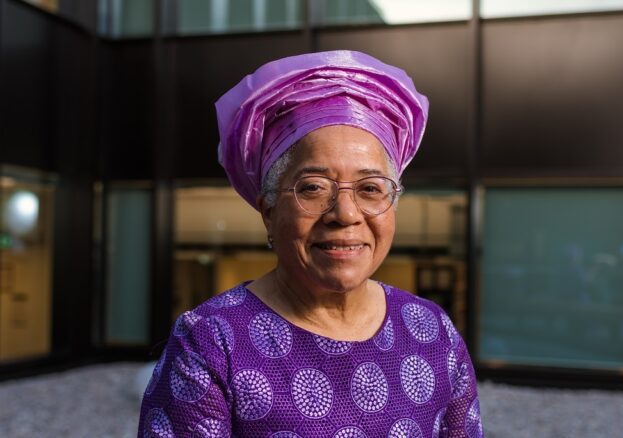
“In 1970s Britain, sickle cell disease was widely misunderstood, and many families affected by the condition struggled to find healthcare professionals who understood their needs.
One nurse decided that had to change.
Meet Professor Dame Elizabeth Anionwu, Britain’s first sickle cell and thalassaemia specialist nurse.
In 1979, working alongside consultant haematologist Dr. Milica Brozović, she helped establish the UK’s first nurse-led Sickle Cell and Thalassaemia Screening and Counselling Centre in Brent, London.
Her mission was bigger than providing medical care. She wanted patients and families to receive proper information, early screening, compassionate treatment, and the support they deserved.
At a time when sickle cell disease was often overlooked within healthcare, Elizabeth became a powerful advocate for affected communities, particularly those of African and Caribbean heritage.
Her work helped establish a model for specialist sickle cell services across the UK and influenced generations of nurses and healthcare professionals.
Her contributions earned her numerous honours, including a CBE in 2001, a Damehood in 2017, and the Pride of Britain Lifetime Achievement Award in 2019.
Today, her story represents more than professional achievement. It is about challenging healthcare inequality, making overlooked communities visible, and ensuring that patients are treated with dignity and understanding.
Sometimes changing healthcare begins with one person refusing to accept that certain patients deserve less care than others.
Source: @prideofbritain
Additional historical references: Royal College of Nursing, University of West London, and Black Cultural Archives.”