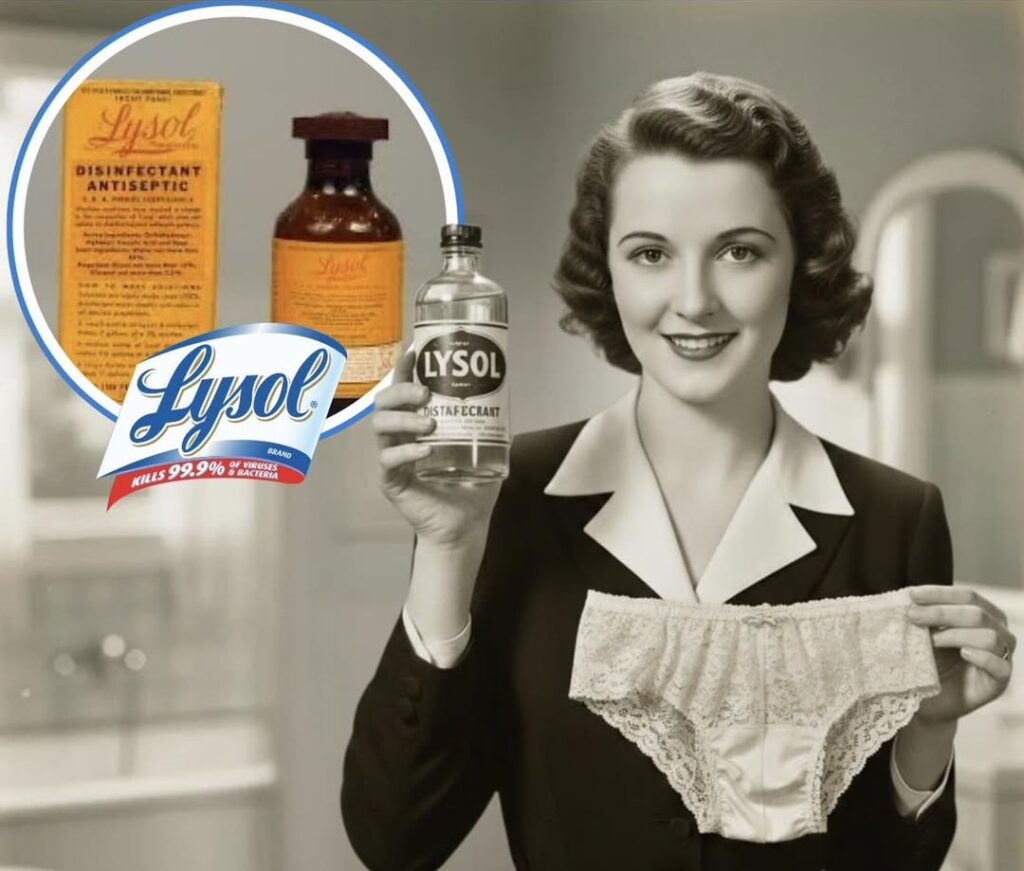
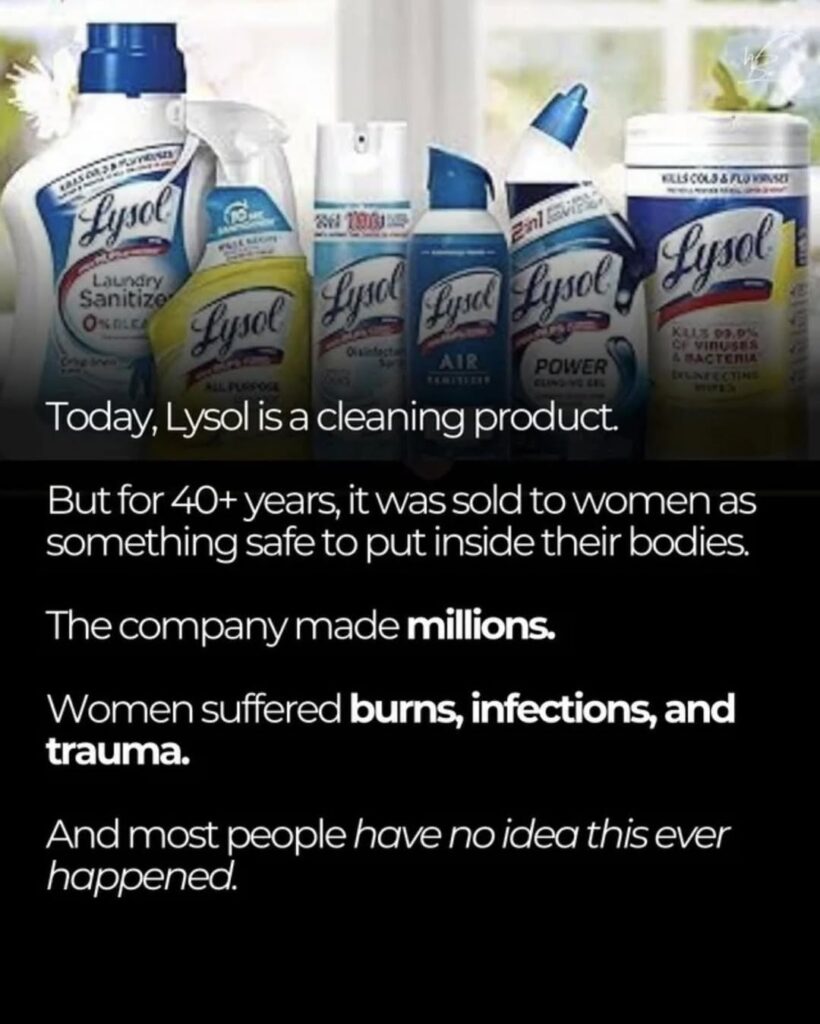
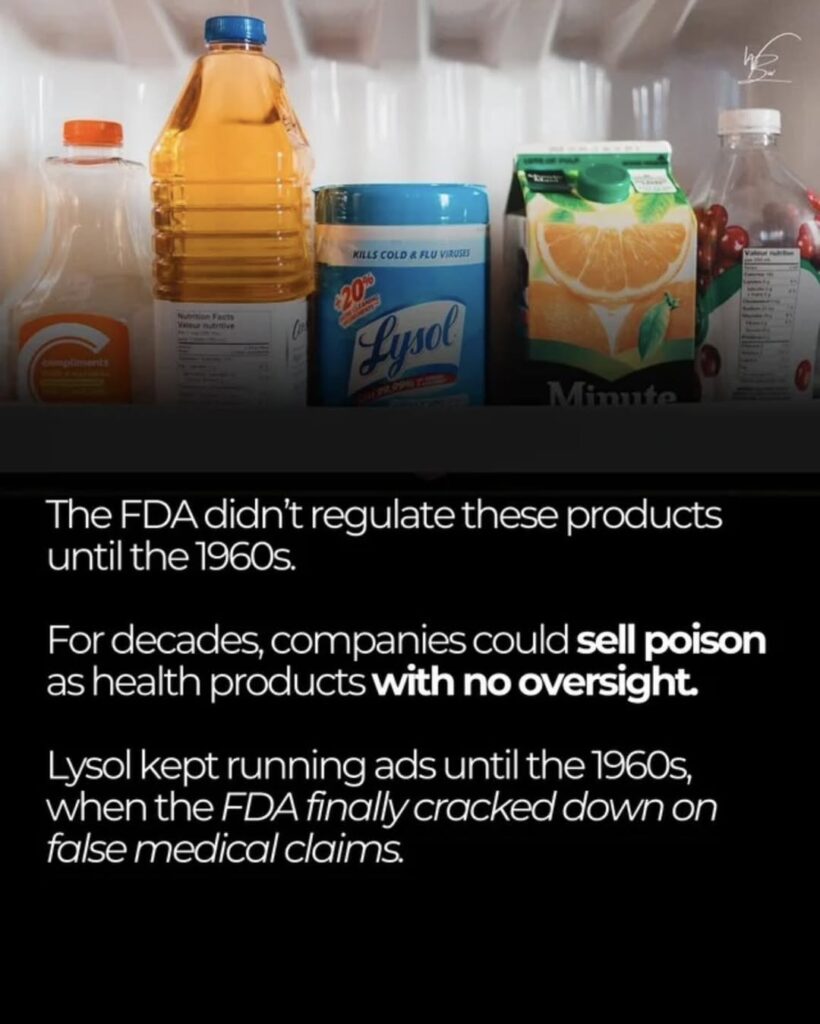
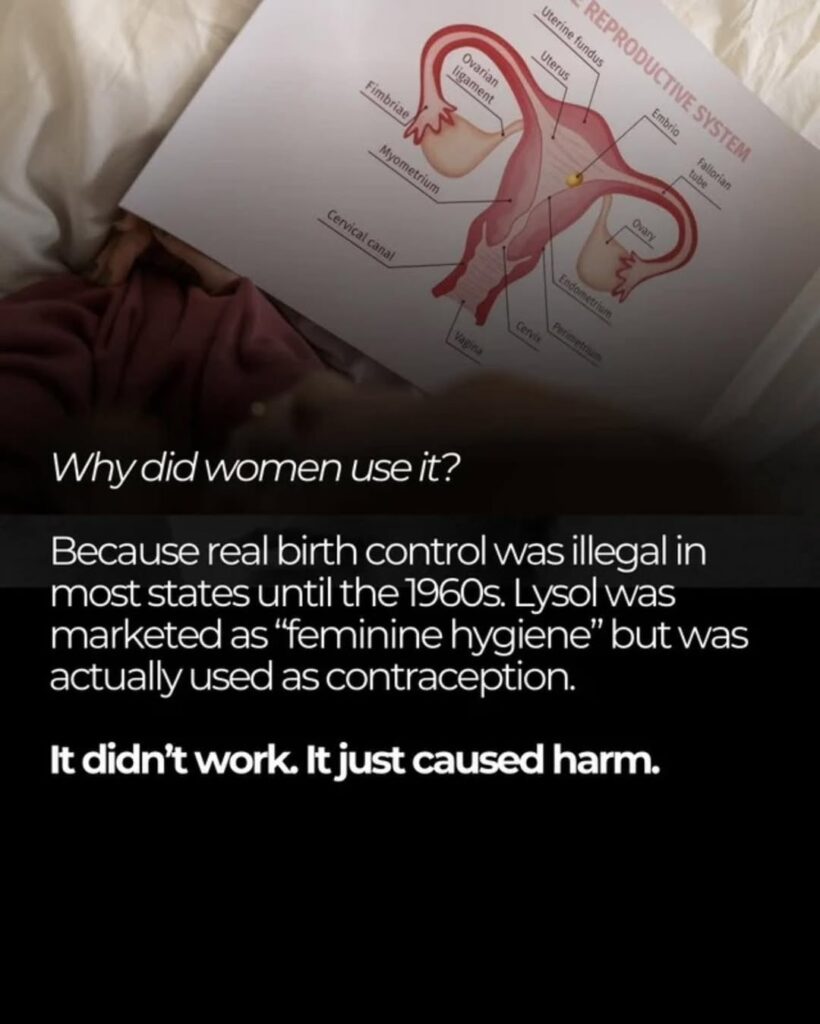
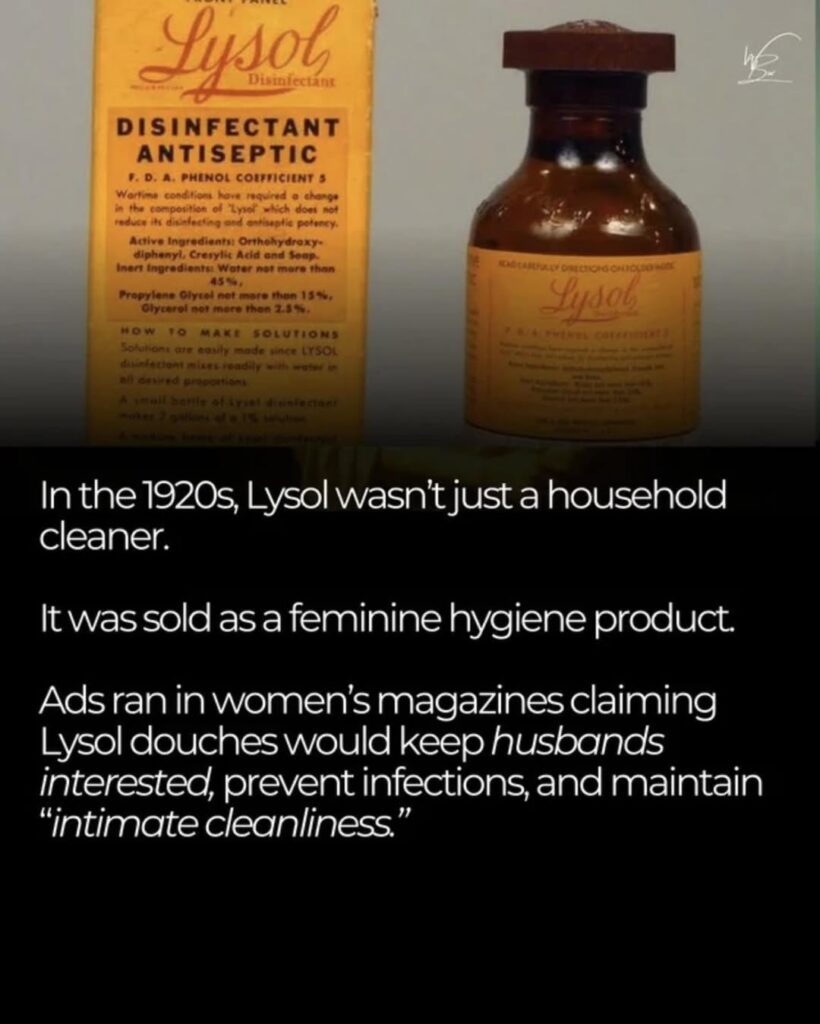
Long before modern conversations about bodily autonomy, informed consent, or ethical advertising, women were quietly targeted by an industry that understood their fears — and exploited them. From the 1920s through the 1950s, Lysol, now widely known as a household disinfectant, was aggressively marketed to women as a so-called “feminine hygiene” solution. In reality, it was a caustic chemical never meant for internal use.
The advertising was rarely explicit. Instead, it relied on coded language — shame, “marital harmony,” and the suggestion that a woman’s body was inherently unclean or dangerous if not constantly managed. At a time when birth control was restricted, sex education was scarce, and doctors were often inaccessible or dismissive, many women trusted what was presented as medical authority. The result was widespread harm: chemical burns, infections, and long-term health consequences that were rarely acknowledged publicly.
This wasn’t accidental. It was calculated marketing in an era when women’s healthcare needs were underserved and their questions silenced. The messaging didn’t just sell a product — it reinforced the idea that women were responsible for fixing imagined problems with their bodies, no matter the risk.
Looking back, this history is unsettling not only because of what was sold, but because of how easily it was normalized. It serves as a reminder that “wellness” has often been shaped by profit rather than care, and that medical misinformation doesn’t always come from ignorance — sometimes it comes from strategy.
Understanding this past matters. It helps explain why skepticism toward beauty, hygiene, and wellness industries isn’t cynicism, but survival. And it underscores why access to accurate healthcare information is not just a luxury, but a necessity.
Source: @women.build.wealth