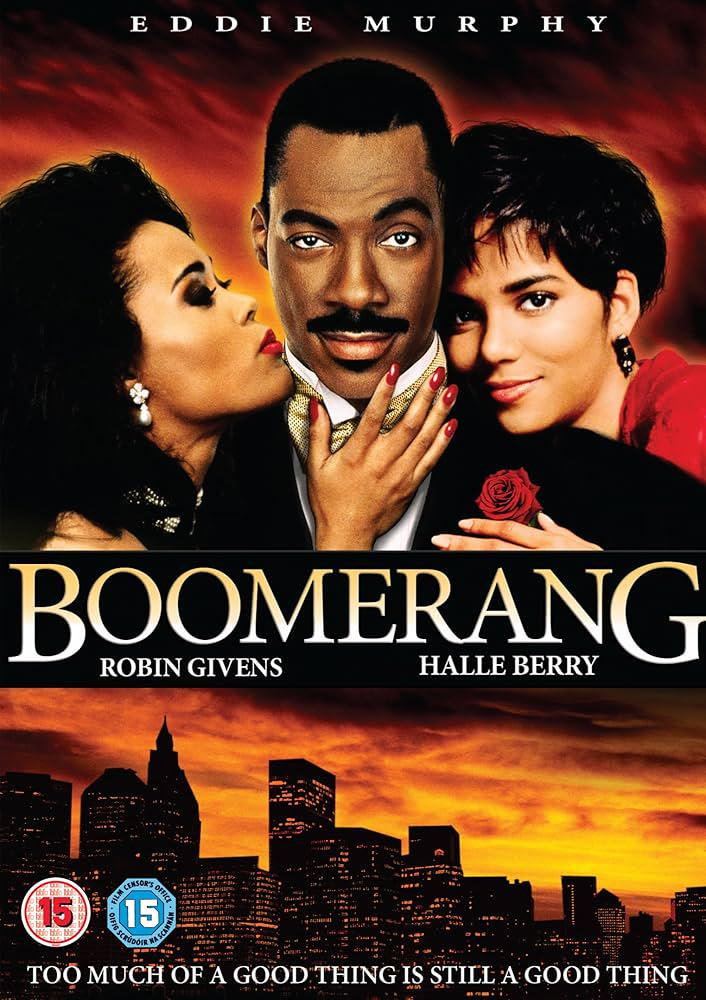
When Black excellence looks unfamiliar, some people call it “unrealistic.”
When Boomerang hit theaters in 1992, the film presented something Hollywood rarely centered at the time: successful Black professionals living, working, and thriving in a world largely populated by other Black people.
That choice drew criticism. The Los Angeles Times described the film’s racial composition as a “reverse world” and called its portrayal of Black success “silly and arbitrary.” Eddie Murphy and director Reginald Hudlin pushed back, arguing that Hollywood had long accepted predominantly white worlds on screen without questioning their realism.
And that’s the bigger conversation.
For decades, Black characters were often expected to fit a limited set of stories: struggle, poverty, crime, or overcoming adversity. Boomerang dared to show Black people already successful. Executives. Entrepreneurs. Wealthy professionals. People whose lives weren’t centered on explaining their Blackness to anyone.
Sometimes representation isn’t about showing what’s familiar.
It’s about expanding people’s imagination of what’s possible.
The question still hits today: Why does Black success sometimes have to be explained before it’s believed?
📌 Source: @8atthetabletv