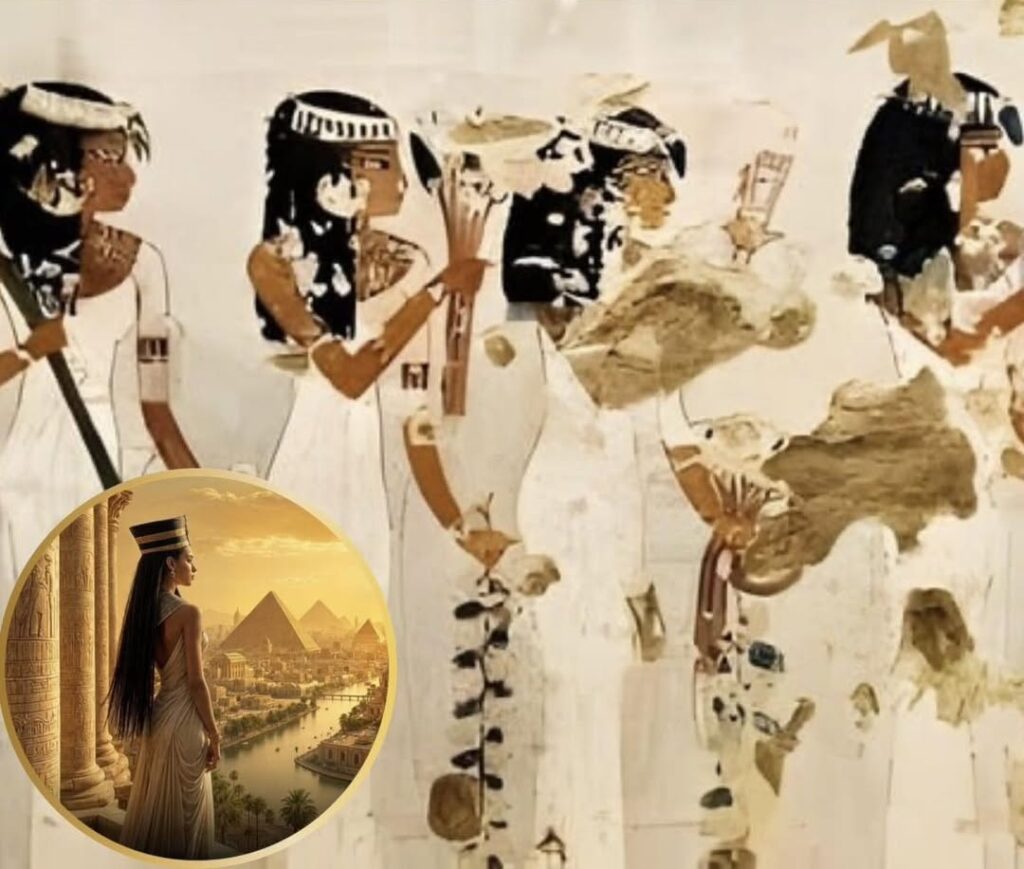
In Ancient Egypt, womanhood was deeply intertwined with creation, balance, and divine order, but not in the oversimplified way modern captions often suggest. Egyptian society revered the power to give life as sacred, and because women carried that power, they were seen as essential to maintaining ma’at—the cosmic balance that governed the universe. This reverence showed up in religion, law, and daily life: goddesses like Isis, Hathor, Ma’at, Sekhmet, and Neith were not symbolic side figures but central forces of creation, protection, justice, and renewal.
Women could own property, initiate divorce, inherit wealth, run businesses, serve as priestesses, and in some cases rule as pharaohs—rights far ahead of many other ancient societies. While not every woman was considered a goddess in a literal sense, femininity itself was viewed as divinely potent, especially through motherhood, healing, and spiritual mediation. Birth was sacred, lineage mattered, and women were understood as vessels through which both life and divine continuity flowed.
So the deeper truth is this: Ancient Egyptians didn’t deify women simply because they gave birth—they honored women because birth connected them directly to the gods, the cosmos, and the survival of civilization itself. That respect shaped how women were portrayed, protected, and empowered in one of history’s most enduring cultures.
Source: @motivationmaniahub