
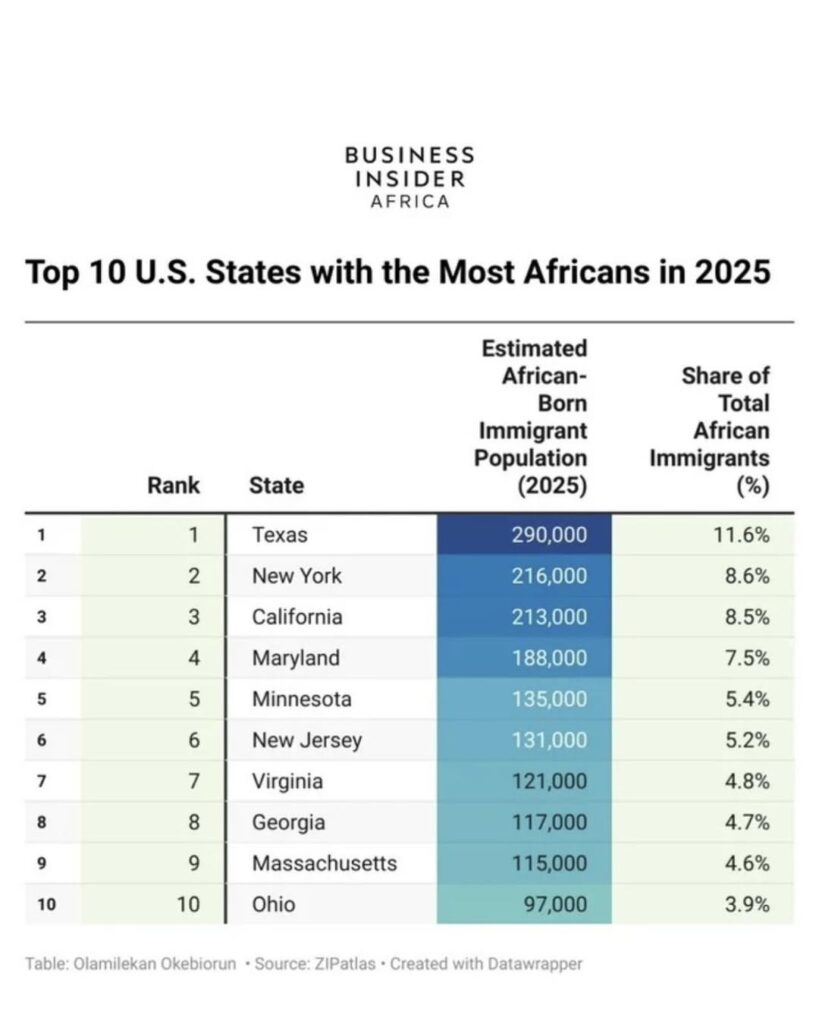
African migration to the U.S. is reshaping communities nationwide.
Recent data highlights a steady rise in African immigration to the United States over the past two decades, largely driven by education, employment opportunities, and family reunification. The African immigrant population has tripled since 2000, with countries like Nigeria, Ethiopia, Ghana, Kenya, and South Africa making up a significant share.
This growth is especially visible at the state level, where certain U.S. states have become major hubs for African communities—fueling cultural exchange while also contributing meaningfully to technology, medicine, research, business, and education. Despite policy headwinds in recent years, including stricter visa rules and reduced refugee quotas, African immigrants continue to play an outsized role in the U.S. economy and social fabric.
The trend underscores a broader reality: African migration is not just about movement—it’s about impact, resilience, and building futures across borders.
Source: @businessinsiderssa